Vector Scooter Art and Moped Layout: A Practical Guide for Designers and Creators
Vector scooter art and moped layout files are versatile assets that cater to a wide range of design needs. Whether you're crafting digital content, producing print materials, or designing merchandise, having access to high-quality vector illustrations can streamline your workflow and elevate the visual appeal of your projects. This article explores the practical value of these resources, their key features, and how they can be effectively used across various platforms and industries.
What Is Vector Scooter Art and Moped Layout?
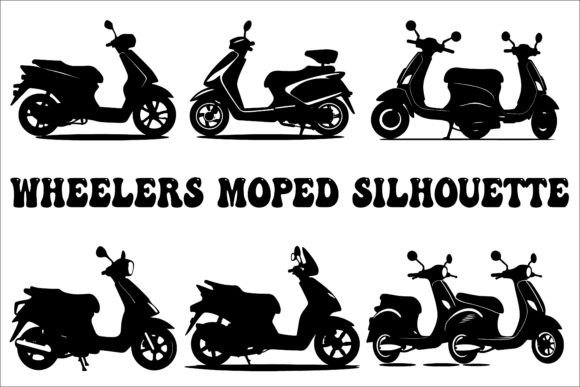
Vector scooter art refers to scalable graphics created using mathematical formulas rather than pixels. These images maintain clarity at any size, making them ideal for both small icons and large-format prints. A moped layout typically includes structured designs that represent the silhouette or blueprint of a moped or scooter, often in black-and-white or simplified form. Such layouts are especially useful when the focus is on shape, proportion, and line work rather than detailed textures or colors.
The combination of vector scooter art and moped layout offers designers a clean, editable base that can be adapted to suit different contexts. These files come in formats like EPS, transparent PNGs, and high-resolution JPGs, ensuring compatibility with most design software and applications.
Key Characteristics and Strengths
- Scalability: Vector-based scooter and moped designs can be resized without loss of quality, which is crucial for maintaining sharp visuals in everything from app icons to billboards.
- Editable Layers: With EPS files, users can modify individual components such as wheels, handlebars, or body shapes. This flexibility allows for customizations tailored to specific brand identities or project requirements.
- Transparency Support: Transparent PNG files enable seamless integration into web and graphic design elements. They look professional against any background and are commonly used for overlays, logos, and UI components.
- High Resolution: JPG images provided in high resolution ensure that printed materials retain their crispness and detail, which is particularly important for marketing collateral and packaging.
- Consistency Across Media: These files offer uniformity in appearance whether displayed online, in print, or embedded in multimedia presentations, helping to reinforce branding and professionalism.
Real-World Applications and Use Cases
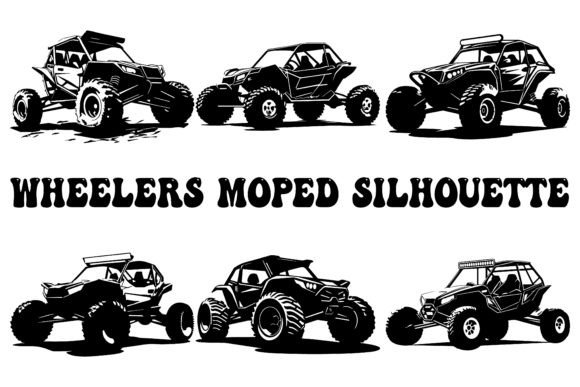
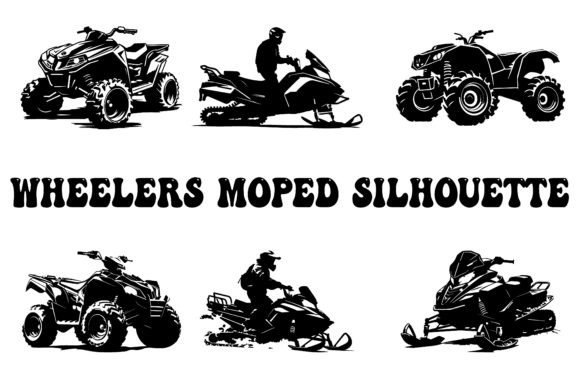
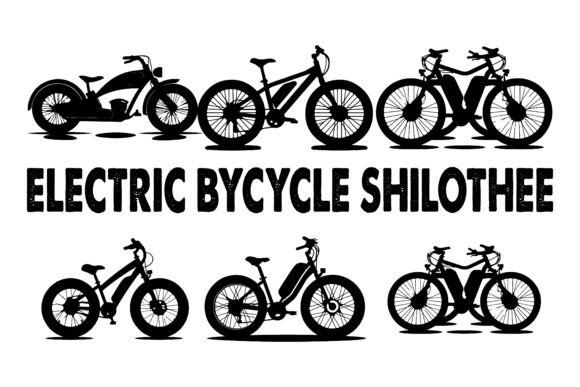
A black silhouette vector of an all-terrain vehicle (ATV) or a sleek city scooter can serve many purposes. Here are some common scenarios where Vector Scooter Art and Moped Layout files shine:
Graphic Design Projects
Designers frequently use vector scooter silhouettes in posters, flyers, banners, and brochures. For instance, a travel agency promoting off-road adventures might feature an ATV silhouette as a central graphic element. The clean lines and bold contrast make it easy to overlay text or other imagery without cluttering the composition.
Web and App Development
In web design, transparent PNGs and SVG versions of moped layouts are invaluable. They can function as website icons, section dividers, or even part of a navigation menu. In mobile app development, vector scooter art can be used for loading animations or interactive buttons due to its lightweight file size and scalability.
Merchandise and Branding
For entrepreneurs and small business owners, vector scooter and moped graphics are essential for product branding. Consider a startup selling eco-friendly urban scooters—using a stylized Vector Scooter Art image on T-shirts, mugs, stickers, and hats can create a cohesive visual identity. The editable nature of EPS files also makes it easy to add company logos or color schemes directly onto the design.
Advertising Campaigns
Marketers benefit from these assets in both digital and traditional advertising. Online ads often require quick-loading, scalable images, and vector scooter art fits this need perfectly. Social media posts can incorporate transparent moped outlines for consistent visual storytelling, while billboards and print ads demand high-resolution JPGs to remain legible from a distance.
Digital Media and Educational Content
E-books, infographics, and educational materials frequently use vector-based scooter and moped illustrations. For example, a textbook explaining transportation evolution might include a Vector Scooter Graphic to depict historical shifts in mobility. Similarly, diagrams in engineering or design courses can leverage moped layouts to demonstrate mechanical structure or aerodynamics.
Who Benefits Most from These Assets?
Several professions and industries stand to gain significantly from utilizing Vector Scooter Art and Moped Layout files:
- Freelance Designers: Those who work across multiple clients and industries appreciate the adaptability of vector scooter graphics for diverse branding needs.
- Marketing Professionals: Creating visually compelling campaigns becomes easier with scalable and customizable scooter/moped artwork that aligns with campaign themes.
- Small Business Owners: Startups in the transportation or outdoor recreation sectors can use these assets for promotional materials and branded merchandise.
- Content Creators: Bloggers, YouTubers, and podcasters may integrate these visuals into social media posts, thumbnails, or presentation slides to enhance engagement.
- Teachers and Educators: Incorporating vector scooter art into lesson plans helps illustrate concepts related to physics, design, and sustainability in a clear and engaging manner.
Quality and Usability Considerations
When evaluating Vector Scooter Art and Moped Layout files, quality and usability are paramount. High-quality vector graphics should have clean paths, accurate proportions, and minimal unnecessary detail. This ensures that the artwork remains flexible and easy to edit without introducing artifacts or distortion.
Usability is enhanced by proper file organization. EPS files with layered components allow designers to adjust specific parts without affecting the entire illustration. Transparent PNGs should be saved with precise alpha channels so that the silhouette appears sharp and the background is cleanly removed. High-resolution JPGs must be optimized for print, typically at 300 DPI or higher.
One limitation worth noting is that vector scooter art may not always capture intricate details such as engine parts or texture gradients. If your project requires realism or complex shading, consider supplementing with raster images or 3D renderings. However, for most creative and commercial applications, the simplicity and scalability of vector scooter art more than compensate for this shortcoming.
Practical Recommendations for Use
- Use EPS Files for Customization: When you need to tweak the design, import the EPS file into Adobe Illustrator or similar software to modify layers and elements.
- Opt for Transparent PNGs in Digital Work: These are perfect for websites, apps, and social media. Always check the dimensions and aspect ratio before placing them in your layout.
- Select High-Resolution JPGs for Print: Ensure the resolution is suitable for your intended output, especially if the scooter or moped will be viewed up close or printed in large format.
- Test Colors and Backgrounds: Silhouette-style Vector Scooter Art works best with solid or gradient backgrounds. Avoid placing it over busy or patterned visuals unless you’re prepared to manage layering effects.
- Stay Consistent with Branding: Use the same style of scooter or moped layout throughout your materials to maintain a unified look and feel.
Long-Term Value and Reliability
Investing in Vector Scooter Art and Moped Layout files provides long-term value. Their adaptability means they can evolve with your brand or project. For example, if you initially use a VectorMopedArt in grayscale for a minimalist logo, you can later recolor it in vibrant hues for a seasonal promotion without losing quality.
Reliability is another key factor. Well-crafted vector scooter art avoids issues like pixelation or jagged edges, which are common with low-quality raster images. As technology advances and display resolutions increase, vector-based scooter graphics continue to perform well without requiring rework or replacement.
Possible Limitations and Workarounds
While Vector Scooter Art and Moped Layout files are powerful tools, they do have limitations. For one, they may lack the depth and realism of photographic images. Additionally, working with vectors requires some familiarity with design software, which could be a barrier for beginners.
To overcome these challenges, creators can pair vector scooter graphics with photographs or use them as stencils for applying textures and effects. Many online tutorials and templates simplify the editing process, making it accessible to those with intermediate skills. Also, consider using them as part of a larger collage or infographic where they complement other visual elements.
Conclusion
Vector scooter art and moped layout files are more than just decorative elements—they are functional, adaptable, and valuable additions to a designer’s toolkit. From web design to product branding, these graphics provide a foundation for creative expression while supporting technical precision and aesthetic consistency.
If you're looking to incorporate scooter or moped imagery into your next project, carefully selecting high-quality Vector Scooter Art and Moped Layout assets can save time, reduce costs, and deliver professional results. By understanding their strengths and limitations, you can determine whether they fit your workflow and audience expectations. Ultimately, these files offer a reliable and efficient way to bring mobility-themed visuals to life across multiple mediums and industries.